How to Make Desserts Consistent Every Time
You use the same recipe every time, yet one batch may be perfectly soft while another turns firmer, takes longer to set, or produces a different number of pieces. These differences often come from small details that change during production—from ingredient weights, heat, timing, and container size to the resting period. To achieve similar quality every time, you need to control the recipe, the process, and the finished result, rather than judging only whether one batch tastes good.
A Dessert Standard Covers More Than Appearance
The term “standardised dessert” does not mean every piece must look identical or machine-made. It means the key quality characteristics should remain at a similar level every time. These should include:
• Flavour and sweetness level
• Texture, such as softness, chewiness, smoothness, or stability
• Weight and size per piece
• Colour and degree of doneness
• Number of pieces produced per recipe
• Condition after resting and packaging
Clearly defining what “the desired quality” means makes it easier to evaluate each batch accurately, rather than relying on a vague impression that it seems different from the previous one.
Start with a Measurable Recipe, Not One That Depends on Memory
A delicious recipe that still contains phrases such as “about this much” or “estimate by eye” may be difficult to reproduce when production increases, another person takes over, or the menu has not been made for a long time. Weighing ingredients in grams greatly reduces variation, especially for ingredients that directly affect the dessert’s structure, such as flour, coconut milk, water, sugar, and eggs. In addition to ingredient quantities, the details that affect the result should also be specified, such as:
• The size of the mould or tray
• The weight of mixture poured into each layer
• The number of pieces produced from one recipe
• The approximate weight per piece
• The stirring, steaming, or baking time
• The resting time before cutting or packaging
These details turn a basic ingredient list into a kitchen operating guide that can be repeated and passed on to someone else.
.
What to Record in a Standard Recipe
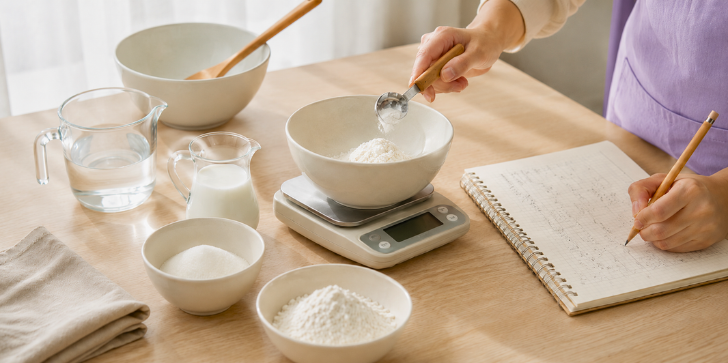
Recipe records do not need to be complicated. It is enough to capture the information that genuinely affects the result. A useful checklist should include:
• Weight of every ingredient
• Brand or type of ingredient used
• Size of containers and equipment
• Mixing sequence
• Heat level
• Stirring, steaming, baking, or resting time
• Number and weight of finished pieces
• The dessert’s texture after production
• Problems found in that batch
• Changes made from the previous batch
When a batch gives a good result, mark it as the reference recipe so the next production run begins with clear information instead of guesswork.
.
.
Keep Production Variables Consistent
Even when the ingredients are weighed exactly the same, the dessert may still turn out differently if the process changes. The most common variables are heat and timing. Too much heat can cook the flour too quickly, resulting in a firm or lumpy texture. Too little heat may slow the thickening process, allow more liquid to evaporate, and alter the intended texture. The timing of each step also matters. For example, if the mixture is left to rest before steaming in one batch but steamed immediately in another, the results may differ even though the written recipe is exactly the same. Try to keep the following factors consistent:
.
• Use the same stove and burner whenever possible
• Use containers of a similar size
• Follow the same sequence of steps
• Time the critical stages
• Control the size of each production batch
• Rest the dessert for a similar length of time
• Record every change in temperature or ingredient condition
A small kitchen does not need complex equipment. A timer, a scale, and a notebook that are used consistently can already reduce variation significantly.
.
Batch Size Matters More Than You May Think
A recipe that works well for one tray will not necessarily produce the same result when immediately scaled up to three trays. When ingredient quantities increase, mixing, stirring, steaming, and resting times may also change. Larger containers distribute heat differently. The mixture at the bottom may cook faster than the top, or the centre of the tray may set more slowly than the edges. Before increasing production, test it in stages:
1. Increase from one recipe to one and a half recipes.
2. Retest the timing at each stage.
3. Check doneness and texture throughout the batch.
4. Record the number of pieces and any waste.
5. Adjust the process before increasing the next batch.
This approach shows which parts of the process need to change with production size and reduces the risk of scaling up too quickly.
.
Inspect the Result—Do Not Wait for the Customer to Report a Problem
Following every step in the recipe does not complete the process. You must also check whether the finished result meets the standard you set.
After the dessert has rested, sample at least one or two pieces. Check both measurable values and sensory characteristics, including:
• Whether the weight per piece is similar
• Whether size and thickness are consistent
• Whether colour and doneness are even across the tray
• Whether the texture is as soft, chewy, or stable as intended
• Whether there is water separation, condensation, or a soggy surface
• Whether the dessert cuts neatly after resting or loses its shape
• Whether it still looks neat after being placed in the package
Post-production inspection helps identify whether a problem comes from the recipe, the process, or the resting period. Changing ingredient proportions immediately may create more confusion because the actual cause may be the heat, steaming time, or packaging before the dessert has set sufficiently.
.
Use One Standard Sample as a Reference
When a batch gives a good result, photograph it and save the relevant information. This reference helps everyone in the kitchen share the same understanding of the desired quality and reduces differences caused by personal judgement. Record:
• A cross-section photograph
• Surface colour and gloss
• Weight per piece
• Thickness or dimensions
• Texture when pressed or cut
• Condition after the specified resting time
.
Keep Ingredients Consistent, Especially Those That Affect Structure
Sometimes the recipe and process remain the same, yet the result changes because the ingredients are not the same as in the previous batch.
Different coconut milks may vary in concentration. Different sugars may vary in sweetness and dissolving behaviour. Different flours also affect softness, chewiness, transparency, and the ability of a dessert to hold its shape.
To control quality, avoid changing ingredients unnecessarily and record every change in type, brand, or supplier.
For example, if a recipe uses rice flour as its main structural ingredient and it is replaced with another type of flour, the texture may change even when the same weight is used.
Choosing flour that suits the menu and using ingredients from a consistent source, such as Fancy Carp Brand flour, can help reduce variables in the recipe. However, it should still be tested in the kitchen’s actual recipe and the result recorded before it becomes the regular standard.
The key is not to find one ingredient that is best for every menu item. It is to choose ingredients that suit the desired result and keep those conditions consistent enough to compare one batch with another.
.
Begin Standardisation with One Menu Item
You do not need to organise every menu item in one day. That can become such a large task that the work never truly begins.
Choose a menu item that is made frequently, sells well, or has the most inconsistent quality, then follow this sequence:
1. Write the complete recipe in grams.
2. Specify the equipment and container size.
3. Time the critical stages.
4. Record the yield and weight.
5. Inspect the texture after resting.
6. Photograph the batch with the best result.
7. Repeat the process using the same recorded conditions.
Once repeated production gives a similar result, apply the same method to the next menu item. This may seem slower than writing standards for several recipes at once, but it creates a system that can actually be used and reduces the need to solve the same problems repeatedly.
.
A dessert that tastes consistently good does not begin with a complicated secret recipe. It begins with paying attention to the same details every time. When ingredients are weighed accurately, timing is controlled, results are recorded, and the dessert is inspected before it leaves the kitchen, the same recipe has a much better chance of producing consistent results. That consistency gradually becomes the confidence customers remember.