How Different Types of Flour Affect the Shelf Life of Desserts

A dessert that tastes wonderful when freshly made may become less appealing after several hours. Some desserts firm up as they cool, while others turn soggy or lose their shape inside the box. Even if the dessert has not spoiled, its texture and appearance may change noticeably. Understanding dessert shelf life therefore means looking beyond the question, “How many days will it keep?” Quality during storage is connected to the recipe, moisture, packaging, temperature, and type of flour—all of which affect softness, chewiness, thickness, stability, and overall appeal over time.
.
Dessert Shelf Life Is About More Than When a Dessert Spoils
Shelf life is the period during which a dessert or food remains safe and maintains its intended quality under specified storage conditions, such as a particular temperature and type of packaging. It does not answer only whether a dessert has spoiled; it also covers the period during which its aroma, flavour, colour, and texture remain as intended.
.
A dessert may show no obvious signs of spoilage even though its quality has begun to decline. The texture may become firmer, the surface may dry out, the colour may fade, or the mouthfeel may no longer match that of a freshly made batch. Consider whether:
- The dessert is still as soft, chewy, or smooth as intended
- It still holds its shape or has started to turn soggy, collapse, crack, or become misshapen
- The surface still looks appetising or has begun to dry out and lose its colour
- It still feels fresh enough when the box is opened
- Its texture changes significantly after refrigeration or resting
.
Assessing shelf life therefore requires attention to both safety and the quality people can actually experience—from appearance, aroma, and texture to the overall impression when eating.
.
How Flour Affects Dessert Quality During Storage
Different types of flour have different properties. Some help a dessert hold its shape, some create chewiness, some thicken and smooth the mixture, and others can give the dessert a clearer, glossier, and more appealing appearance.
.
It is important to make one distinction clear: flour does not automatically extend a dessert’s shelf life. Storage life still depends on the recipe as a whole, the production process, packaging, and storage conditions working together.
.
Flour’s most visible role is therefore in maintaining dessert quality during storage, particularly texture and stability.
.
Flour can affect a dessert in several ways:
- It helps liquids in the recipe bind more effectively.
- It gives the dessert structure so it is less likely to become runny or collapse.
- It helps create the intended texture, such as soft, chewy, springy, or smooth.
- It influences how the texture changes after the dessert cools.
- It affects the dessert’s appeal after resting, packaging, or refrigeration.
.
Desserts that must sit on display, be packed for delivery, or be stored overnight should always be tested after preparation. Some recipes taste excellent when freshly made, but the texture may become firmer, soggier, or misshapen over time and no longer match the intended result.
.
How Different Flour Groups Affect Dessert Shelf Life
.
.
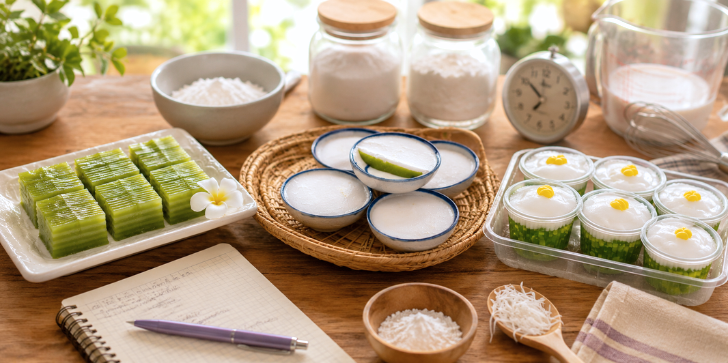
Choosing flour with shelf life in mind begins with two simple questions: What texture should the dessert have, and what conditions will it face after preparation—for example, sitting in a display, travelling in a delivery box, being refrigerated, or being eaten immediately?
.
Glutinous Rice Flour
Suitable for desserts that should be soft and chewy, such as bua loi, khanom tom, or other desserts shaped into balls. This flour gives the dessert elasticity and a satisfying chew, but the finished product should also be tested after resting or refrigeration because some recipes may become denser over time.
.
Wet-Milled Rice Flour
Suitable for desserts that need structure and stability, such as khanom thuai, khanom chan, and other Thai desserts that should set well. This flour helps prevent a dessert from becoming runny or losing its shape, but using too much may make the texture denser or firmer than intended.
.
Tapioca Starch
Adds chewiness, elasticity, and springiness to certain desserts. It suits recipes that need a soft, chewy texture or a slightly more translucent appearance. The proportion must be balanced, as too much can make the texture excessively sticky or viscous.
.
Cornstarch
Suitable for mixtures that need to be thick, smooth, and stable, such as dessert fillings, toppings, or certain dessert sauces. Cornstarch can make the texture finer and smoother, but when the product is stored for a long time or experiences temperature changes, it should be checked for water release or separation.
.
Arrowroot Starch and Fine Arrowroot Starch
Help enhance clarity, gloss, gentle chewiness, and visual appeal. They suit desserts that should continue to look attractive while on display, such as khanom chan, khanom piak poon, or desserts that need an especially smooth and chewy texture.
.
Coloured Rice Flours and Brown Rice Flours
Examples include Riceberry rice flour, black glutinous rice flour, and yellow jasmine brown rice flour. They add colour, aroma, and the appeal of natural ingredients, making them suitable for desserts that need a more distinctive identity. However, colour, aroma, and texture should be tested after storage because some desserts may shift in colour or mouthfeel over time.
.
Good Shelf Life Depends on the Whole Recipe, Not Flour Alone
Although flour affects dessert quality during storage, creating a dessert with good shelf life requires looking at the recipe as a whole.
.
The quality of a dessert does not change because of flour alone. It is also influenced by factors such as:
- The amount of water or coconut milk in the recipe
- The amount of sugar and the concentration of the mixture
- Cleanliness during preparation
- The heat level and time used for stirring, steaming, or baking
- How long the dessert rests before the lid is closed
- The packaging and its ability to release residual heat and steam
- Storage temperature
- Transport time before the dessert reaches the customer
.
For example, a dessert with very high moisture may still become soggy or lose its shape if it is packed too soon, even when the flour is well chosen. If refrigeration is required, check whether the dessert remains soft or becomes firmer after several hours.
The clearest way to understand these changes is to test the recipe in timed stages.
.
Record the results at different points, such as:
- Immediately after preparation
- After resting for 2–4 hours
- After being placed in the box
- After refrigeration
- After being removed from the refrigerator and allowed to rest
- After a simulated delivery journey
.
This type of testing reveals which change happens first—for example, whether the dessert becomes firmer, soggier, separated, duller in colour, or misshapen. Once the problem is clear, adjustments to the type or proportion of flour, resting method, or packaging can be made more precisely.
.
A good dessert is not measured only by how delicious it tastes when it leaves the kitchen, but also by how well it preserves its appeal over time. Understanding the period during which a dessert or food maintains good quality begins with observing the small details in the recipe. Choosing flour to suit the intended texture and testing the finished product after resting, packaging, or refrigeration can help carry the intended flavour and experience through to every piece the customer enjoys.