A Menu Kids Like, Parents Feel Confident About: How to Test the Market Before Selling

A menu that looks promising in the first trial does not need to be produced in large quantities right away. Testing it in small amounts first helps reveal both what children like and what parents consider when making a decision.
.
Start by Testing a Small Number of Menu Items
Testing a menu before selling does not need to begin with a large quantity. Try making enough for people to actually taste, and clearly define what you want to learn from the menu in that round.
You might start with just one recipe or format so that the feedback refers to the same menu. If too many versions are tested at the same time, it may be difficult to tell which part of the menu the feedback relates to.
The first round does not need to answer every question. Simply gather enough information to see which points should be explored further in the next round.
.
Children’s and Parents’ Opinions Do Not Have to Be the Same
Children and parents look at snacks from different perspectives, so all feedback should not be combined into a single answer that the menu is “good” or “not good.”
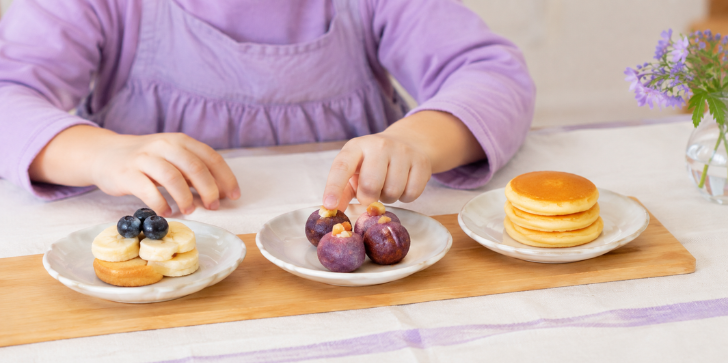
Children are the ones directly experiencing the food, so they may be able to say which part they like, whether they would like to eat it again, or what they would like to be different from this round.
.
.
Parents, on the other hand, often look further at details that affect whether they would choose that menu in real life, which may differ from what children consider important.
Both types of information are useful in different ways. Separating the feedback from the beginning helps make it clearer which points reflect the eater’s preferences and which are factors in the decision-making process.
.
Ask More Than Just “Is It Delicious?”
The question “Is it delicious?” can give an initial sense of how someone feels, but it provides relatively little information if the feedback needs to be used to improve the menu.
With children, simple questions such as “Which part did you like the most?” or “Would you like to eat this menu again?” can help get answers based on the experience that has just happened.
For parents, you might ask “Is there anything that would make you hesitate to choose this menu?” or “If this menu were available, which time of day would it be most suitable for?”
There is no need to create a long questionnaire. Simply choosing questions that help answer what you want to know in that round makes the feedback easier to use than collecting only compliments that the food is delicious or looks appealing.
.
Look at the Actual Eating Experience, Ingredients, and Price
Feedback from a trial is not only about taste. What happens when the menu is actually eaten is also important information for the next round of decisions.
Some menus may receive compliments for their taste, but when tested in a real situation, there may still be details that should be adjusted to better suit the intended time or way of use.
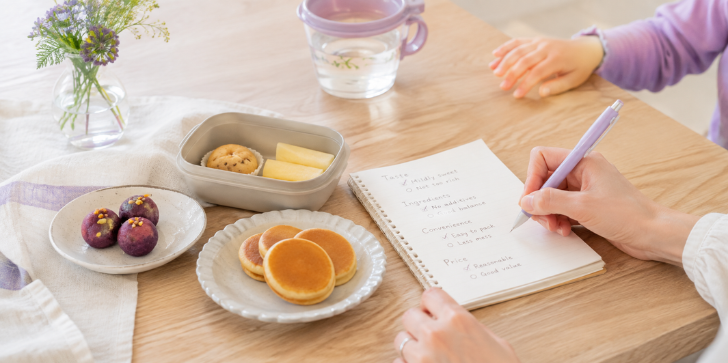
Ingredients are another type of information that parents may consider when making a decision, together with price, convenience, and suitability for actual use.
.
.
Price therefore does not need to be considered separately from the menu itself. It should be viewed together with what is received, such as the quantity, ingredients, and convenience, to see whether the intended price level makes the decision easier or whether there are still points that create hesitation.
Separating these factors from the word “like” helps make it clearer what reflects feelings about the menu and what actually affects the decision.
.
Adjust One Point at a Time, Then Test Again
At the end of a trial round, there is no need to change everything according to all the feedback at once. Look for points that are mentioned repeatedly or have the greatest effect on the decision, then choose to adjust just one or two points first.
.
Changing one point at a time makes it easier in the next round to see how the adjustment changes the feedback. If several things are changed at once, it becomes difficult to track which part caused the result to differ from before.
.
After that, test another small batch, collect a new set of feedback, and then decide what should be kept, what should be adjusted further, or whether the menu is ready to be made again in larger quantities.
.
Before increasing a menu from just a few pieces to a large quantity, let small trial rounds help answer what should be kept and what should be adjusted. Information from actual eating experiences helps make the next decision clearer than relying on guesswork alone.